
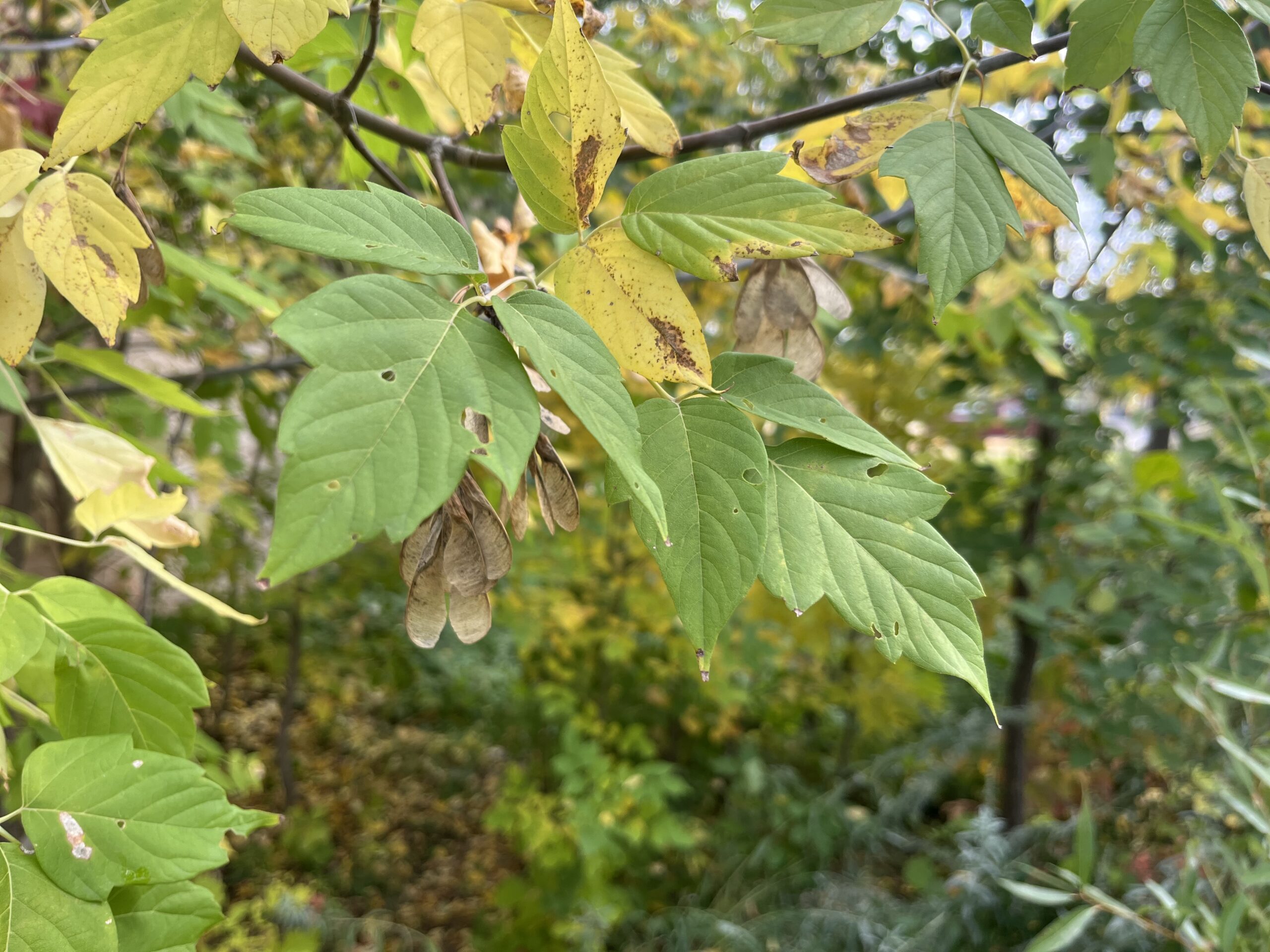
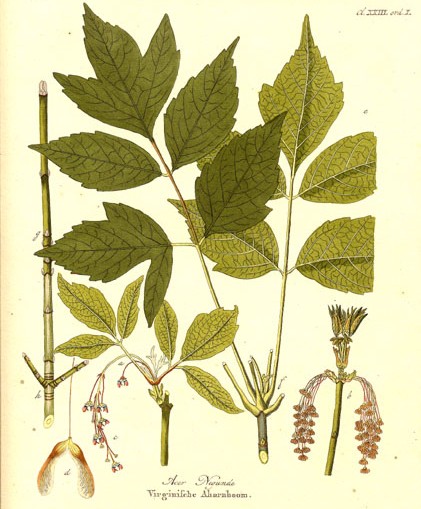
Manitoba Maple (Acer negundo)
HOW IT IS KNOWN IN OTHER LANGUAGES
Name(s) in Ojibwe(Anishinaabemowin): Manitoba ziizibaakwad (Roger Roulette, 2021).
Although some sources refer to the Manitoba maple as adjagobi’mak in Anishinaabemowin. 1
Name(s) in French: Érable du Manitoba, Érable à Giguère
Name(s) in Cree: TBD*
Name(s) in Michif: TBD*
Name(s) in Dakota: TBD*
* Know the name? Know another word for the same plant not listed above? We’d love to hear about it! Please add in the comments below along with any info that might help, such as links, dialect, area you are from, where you heard it.
PLANT TYPE
Deciduous tree
HABITAT
Found in: riverbanks, stream beds, lakeshores, disturbed lands, open areas.
ZONE
2 to 9
How to IdentifHOW TO
– Flowers: small yellow-green flowers appear in spring. The flowers are not very showy because the tree is wind pollinated.
– Leaves: compound, meaning one leaf is made of multiple smaller leaflets. Manitoba Maple leaves usually have 3–5 leaflets.
– Seeds: female trees produce paired winged samaras. These form from summer to fall (some stay on the tree into winter)
– Branches: opposite to each other, smooth, green when young and then becomes grey or even black.
Indigenous context
– The pillager ojibwe people collected the sap and mixed it with regular sugar maple sap to drink as a beverage.
– The Ojibwe peoples mix Manitoba Maple sap with Sugar Maple sap and drink it as a beverage.
– The inner bark of the Manitoba Maple was used by the Ojibwe peoples to induce vomiting.
– The Dakota and Omaha people made the wood into charcoal, which is used in ceremonial painting and tattooing.,
– The sap of the Manitoba Maple has been used to make syrup by multiple indigenous populations of North America including the Dakota, Cree, Sioux, and Omaha amongst others.
Did you know?
– Manitoba Maple seeds are often called “Helicopter seeds” because they spin as they fall to the ground.
– Manitoba maple was identified as the material used in the oldest extant wood flutes, discovered in 1931 in Northeastern Arizona and dated to 620-670 CE.
– Manitoba Maple is the only Maple native to Canada with compound leaves.
– Manitoba Maples are considered Invasive in Ontario.
Activity
Look around, can you find…
Winged Samaras
Small yellow-green flowers
birds
Learn more
Height at Maturity: 10-20 m
What soil type do Manitoba Maple need?
The Manitoba Maple tolerates drought and flooding conditions, and can grow in solid from sandy loam to clay. However it prefers a neural pH around 6.5-7.5 and can tolerate slightly acidic soils with a pH as low as 5.
What sun conditions do they grow best in?
Grows best in sunny conditions and tolerates partial shade.
When to collect the seed?
The helicopter seeds/ samaras are ripe and ready to collect at the end of the summer/ beginning of the fall from August to September.
How to grow Manitoba Maple from seed?
The mature samaras collected in the fall, can be sown outdoors to experience winter conditions and germinate the upcoming spring. For spring sowing, then we would have to imitate the natural conditions through cold stratification around 0-5℃ for 60-90 days in a moist medium,.After that, the seed can then be planted in appropriate soil and sun conditions which will allow the seeds to germinate in approximately 2-7 weeks. Although germination time may vary, considering factors such as seed size and the duration of cold stratification.
- Meeker, J. E., Elias, J. E., & Heim, J. A. (1993). Plants used by the Great Lakes Ojibwa. Great Lakes Indian Fish and Wildlife Commission. https://www.miinojibwe.org/wp-content/uploads/2025/07/Plants-1.pdf.[↩]